
Choosing the right bathroom vanity is one of the most impactful decisions you will make during a bathroom remodel. The vanity anchors the entire space—it dictates storage capacity, determines countertop real estate, and sets the visual tone for everything from tile to lighting. Yet with hundreds of bathroom vanity sizes, bathroom vanity styles, and bathroom vanity materials available, the selection process can feel overwhelming fast. This bathroom vanity buying guide was written specifically for Westchester County homeowners who want straightforward, practical answers—from how to measure your space to whether a floating vanity or a freestanding vanity better suits your bathroom, to what a realistic bathroom vanity replacement cost looks like in the White Plains area. Read on for everything you need to make a confident, informed choice.
Key Takeaways
- Measure first: Always confirm clearances for doors, toilets, and shower swings before settling on a vanity width.
- Standard vs. comfort height: Most modern vanities are built to comfort height (34–36 in.)—taller and easier on the back than the old 30–32 in. standard.
- Single vs. double sink: A double sink vanity makes sense for shared primary bathrooms; a single sink vanity works best in guest baths or tighter spaces.
- Material durability matters: For humid bathrooms, marine-grade plywood or solid wood cabinets outperform particleboard; quartz countertops require far less sealing than marble countertops.
- Custom vs. prefab: Custom bathroom vanities offer a perfect fit and premium finish but cost more; prefab units deliver speed and value for standard-sized spaces.
- See it in person: Finishes, hardware weight, and drawer glide quality are impossible to judge online—visit a bathroom design showroom before committing.
Why Your Bathroom Vanity Choice Matters
The bathroom vanity is the workhorse of the room. It houses your plumbing, provides counter space for daily routines, and offers bathroom storage solutions that keep the rest of the space clutter-free. A well-chosen vanity can make a compact powder room feel polished, transform a master bathroom into a spa bathroom, or simply bring an outdated space into the current decade. According to the National Kitchen & Bath Association (NKBA), the bathroom is consistently among the top two rooms homeowners renovate—and the vanity is almost always the focal point of that investment.
| Vanity Type | Best For | Storage | Visual Weight |
| Floating / Wall-Mounted | Modern, small-to-mid bathrooms | Moderate | Light |
| Freestanding Cabinet | Traditional, large bathrooms | High | Substantial |
| Pedestal Sink | Powder rooms, tight spaces | None | Minimal |
| Console Sink | Transitional, open designs | Low | Open/Airy |
| Corner Vanity | Small bathrooms with odd layouts | Moderate | Space-saving |
How to Measure Your Bathroom for the Right Vanity Size
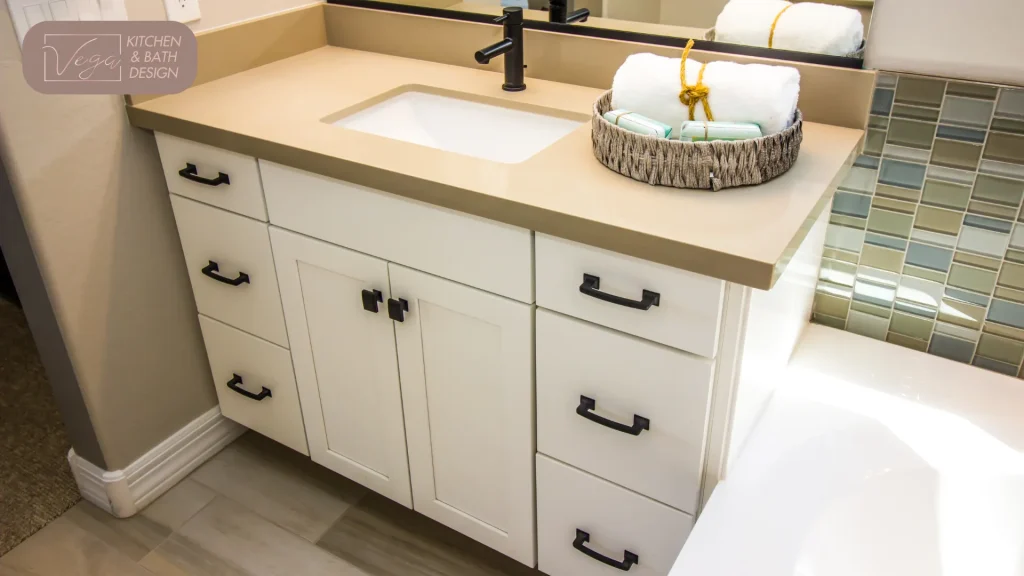
Before browsing any showroom or catalog, grab a tape measure. The most common mistake homeowners make is falling in love with a vanity and only then realizing it blocks a door swing or crowds the toilet. Here is how to measure for a new bathroom vanity properly:
- Width: Measure the wall space available. Factor in door swings, window trim, and at least 15–21 inches of clearance on either side of the toilet.
- Depth: Standard vanities run 18–24 inches deep. In tight spaces, a shallower 16-inch unit can recover precious floor area.
- Height: Standard height is 30–32 inches; comfort height is 34–36 inches. Measure from finished floor to the underside of any overhead cabinets.
- Plumbing: Note your drain and supply line locations—these limit how much you can shift placement without additional plumbing work.
| Bathroom Type | Recommended Vanity Width | Sink Configuration | Notes |
| Powder Room | 18–24 in. | Single | Pedestal or small cabinet both work |
| Full Bath (single user) | 30–48 in. | Single | More counter space is always welcome |
| Shared Full Bath | 48–60 in. | Single or Double | Double sink saves morning traffic |
| Primary / Master Bath | 60–72 in. | Double sink vanity | Room for separate grooming zones |
| Deluxe Primary Bath | 72–96 in. | Double sink vanity | Consider two separate vanity units |
Bathroom Vanity Styles: Which One Fits Your Home?
Once you know your size constraints, you can shop by bathroom vanity styles. Westchester homes run the gamut from 1920s Tudors to sleek new construction condos—your vanity style should complement your home’s broader architectural language.
Floating / Wall-Mounted Vanity
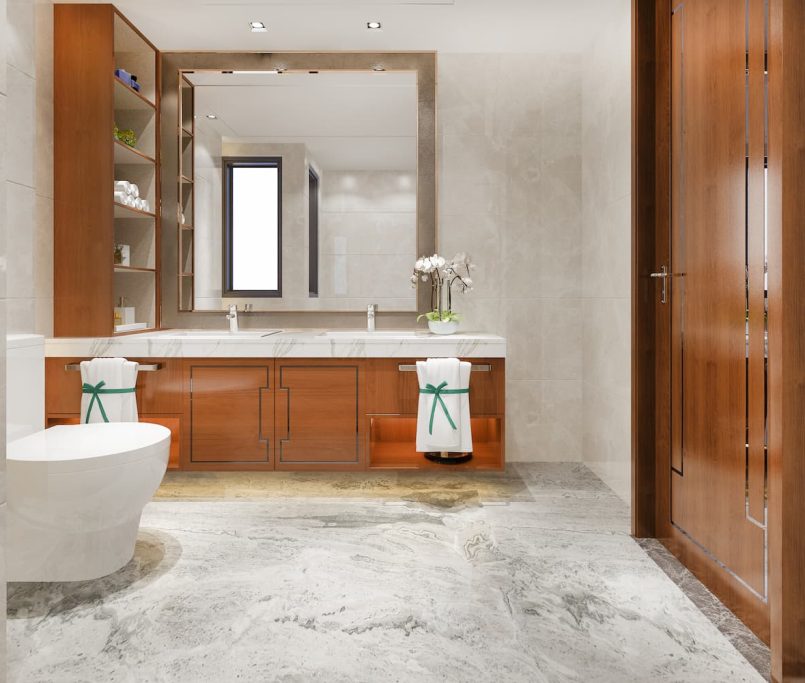
The floating vanity—also called a wall-mounted or open bottom vanity—is currently the most requested style at local showrooms. By mounting the cabinet to the wall and leaving the floor exposed, it visually enlarges the room and makes mopping a breeze. It works beautifully in modern, transitional, and Scandinavian-inspired bathrooms. Keep in mind: the wall must be properly reinforced to support the weight of the cabinet plus stone countertop.
Freestanding / Floor-Standing Vanity
Floor-standing freestanding vanities offer maximum vanity cabinet storage and suit traditional or farmhouse aesthetics. They are generally easier to install because they do not require wall blocking, and they can accommodate wider spans without custom millwork. If you have a larger bathroom and appreciate a furniture-like look, this is your category.
Pedestal & Console Sink
Ideal for powder rooms where bathroom storage is handled elsewhere, a pedestal sink maximizes legroom in the tightest spaces. A console sink threads the needle—two front legs, a lower shelf, and a towel bar give you a touch of storage while keeping the open, airy feel of a pedestal.
| Style | Space Requirement | Storage | Best Design Match | Avg. Cost Range |
| Floating / Wall-Mounted | Any (reinforced wall needed) | Moderate | Modern, Transitional | $400–$3,000+ |
| Freestanding Cabinet | Medium–Large | High | Traditional, Farmhouse | $300–$5,000+ |
| Pedestal Sink | Very Small | None | Classic, Minimalist | $150–$800 |
| Console Sink | Small–Medium | Low | Transitional, Industrial | $300–$1,500 |
| Corner Cabinet | Very Small | Moderate | Any | $200–$1,200 |
Single vs. Double Sink Vanity: Which Is Right for You?
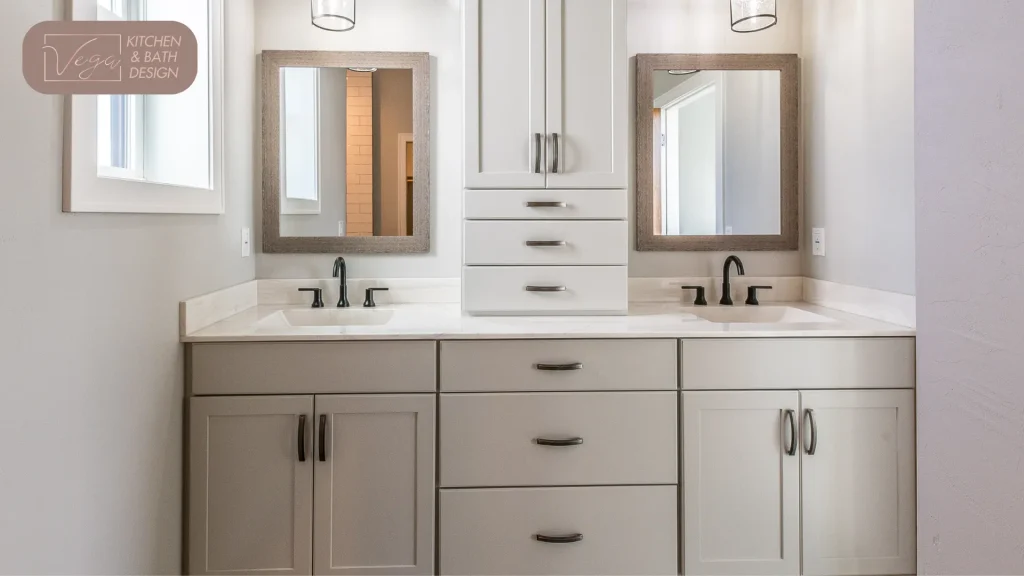
One of the first decisions people wrestle with is the single vs double sink vanity question. The honest answer depends less on preference and more on who shares the bathroom and how your mornings unfold.
| Factor | Single Sink Vanity | Double Sink Vanity |
| Minimum recommended width | 24–36 in. | 60–72 in. |
| Best for | Guest bath, powder room, solo user | Shared primary or master bath |
| Counter space | More free counter | Divided between two users |
| Plumbing cost | Lower (one drain/supply run) | Higher (two drain/supply runs) |
| Visual impact | Clean, focused look | Symmetrical, hotel-like aesthetic |
| Resale appeal | Neutral | Strong positive signal for buyers |
For most Westchester County primary bathrooms, a double sink vanity at 60–72 inches is the sweet spot—it adds daily convenience and meaningful resale value. For guest bathrooms or powder rooms, a well-styled single sink vanity with smart storage is the smarter spend.
Cabinet Materials & Bathroom Vanity Countertop Options
The longevity of your bathroom vanity depends heavily on bathroom vanity materials—both the cabinet carcass and the countertop surface. Bathrooms are harsh environments: humidity, daily water exposure, and temperature swings all degrade inferior materials over time.
Cabinet Construction Materials
- Solid wood: The most durable option for cabinet doors and frames; requires proper sealing to resist moisture. White oak vanity construction is the current favorite in high-end NYC and Westchester projects.
- Marine-grade / hardwood plywood: The professional standard for cabinet carcasses—dimensionally stable, moisture-resistant, and holds fasteners well.
- MDF (Medium-Density Fiberboard): Affordable and paints beautifully; best for dry zones away from direct shower splash.
- Particleboard: Found in budget prefab units; avoid for bathrooms with high humidity—it swells and delaminates over time.
Countertop Materials
- Quartz countertops: Non-porous, scratch-resistant, and available in hundreds of patterns. No sealing required. The most practical choice for busy bathrooms.
- Marble countertops: Timeless and elegant, but porous—requires sealing at least once a year. Best in powder rooms or low-traffic primary baths.
- Granite: Durable and unique (every slab is one-of-a-kind); needs periodic sealing like marble.
- Engineered solid surfaces: Integrated sink options possible; seamless look; mid-range pricing.
- Laminate: Budget-friendly and improving in quality; not ideal for vessel or undermount sink configurations.
| Countertop Material | Durability | Maintenance | Avg. Cost/sq.ft. | Best For |
| Quartz | ★★★★★ | None (no sealing) | $70–$120 | Any bathroom, daily use |
| Marble | ★★★☆☆ | Annual sealing | $80–$200+ | Powder rooms, spa primary baths |
| Granite | ★★★★☆ | Periodic sealing | $60–$150 | Transitional/classic styles |
| Solid Surface | ★★★★☆ | Minimal | $45–$100 | Seamless/integrated looks |
| Laminate | ★★☆☆☆ | Minimal | $20–$50 | Budget-conscious renovations |
Vega Kitchen & Bath carries over 200 quartz and natural stone samples on display—you can see and touch the actual material before committing. Read more about surface options in our Countertop Trends 2026 guide.
What Is Comfort Height and Should You Choose It?
If you have toured any showroom in the past five years, you have likely noticed that newer vanities sit taller than the ones in older homes. That extra height is what the industry calls comfort height—and it makes a bigger difference than most people expect.
| Spec | Standard Height | Comfort Height |
| Vanity height range | 30–32 inches | 34–36 inches |
| ADA compliant range | 34–36 inches | 34–36 inches |
| Best for | Children-centric bathrooms | Adults, aging-in-place, taller users |
| Resale consideration | Neutral | Positive (matches current buyer expectations) |
| Back strain | Higher risk for tall users | Significantly reduced |
For most Westchester homeowners remodeling a primary or shared bathroom today, comfort height is the default recommendation. It aligns with ADA-compliant standards, reduces strain during morning routines, and is what buyers expect to see in updated bathrooms.
Custom vs. Prefab Bathroom Vanity: Pros, Cons & Costs
The custom vs prefab bathroom vanity decision comes down to your space, your budget, and how much the details matter to you. Both options have a legitimate place in bathroom remodeling projects across Westchester.
| Prefab Vanity | Custom Bathroom Vanity | |
| Cost | $300–$3,000 | $3,000–$15,000+ (NYC/Westchester) |
| Lead time | Days to 2 weeks | 6–12 weeks typical |
| Size flexibility | Standard widths only | Built to exact dimensions |
| Material options | Limited | Full palette (wood species, finish, hardware) |
| Installation | DIY-friendly | Requires professional installation |
| Best for | Standard spaces, budget renovations | Odd dimensions, luxury projects |
If your bathroom has non-standard dimensions—or you want the vanity to look like built-in furniture rather than a box from a showroom floor—custom bathroom vanity millwork is worth the premium. For standard-sized bathrooms where the priority is quality materials and good design, a well-chosen prefab unit with an upgraded quartz countertop and quality hardware delivers exceptional results. Explore Vega’s full vanity display at our White Plains showroom, where you can compare both options side by side.
Bathroom Vanity Trends for Westchester Homes
Design preferences shift, but several themes have shown staying power across high-end bathroom design projects in Westchester and the greater tri-state area. According to Houzz’s annual renovation report, homeowners are moving away from cold minimalism toward warmer, more textured spaces with natural materials.
| Trend | What It Looks Like | Works Best With |
| Warm wood tones | White oak, walnut cabinet finishes | Matte black hardware, quartz tops |
| Floating vanities | Wall-mounted, open floor below | Large-format floor tile |
| Fluted cabinet fronts | Vertical grooved door profiles | Brass or brushed gold fixtures |
| Deep color vanities | Forest green, navy, charcoal | Marble or light stone countertops |
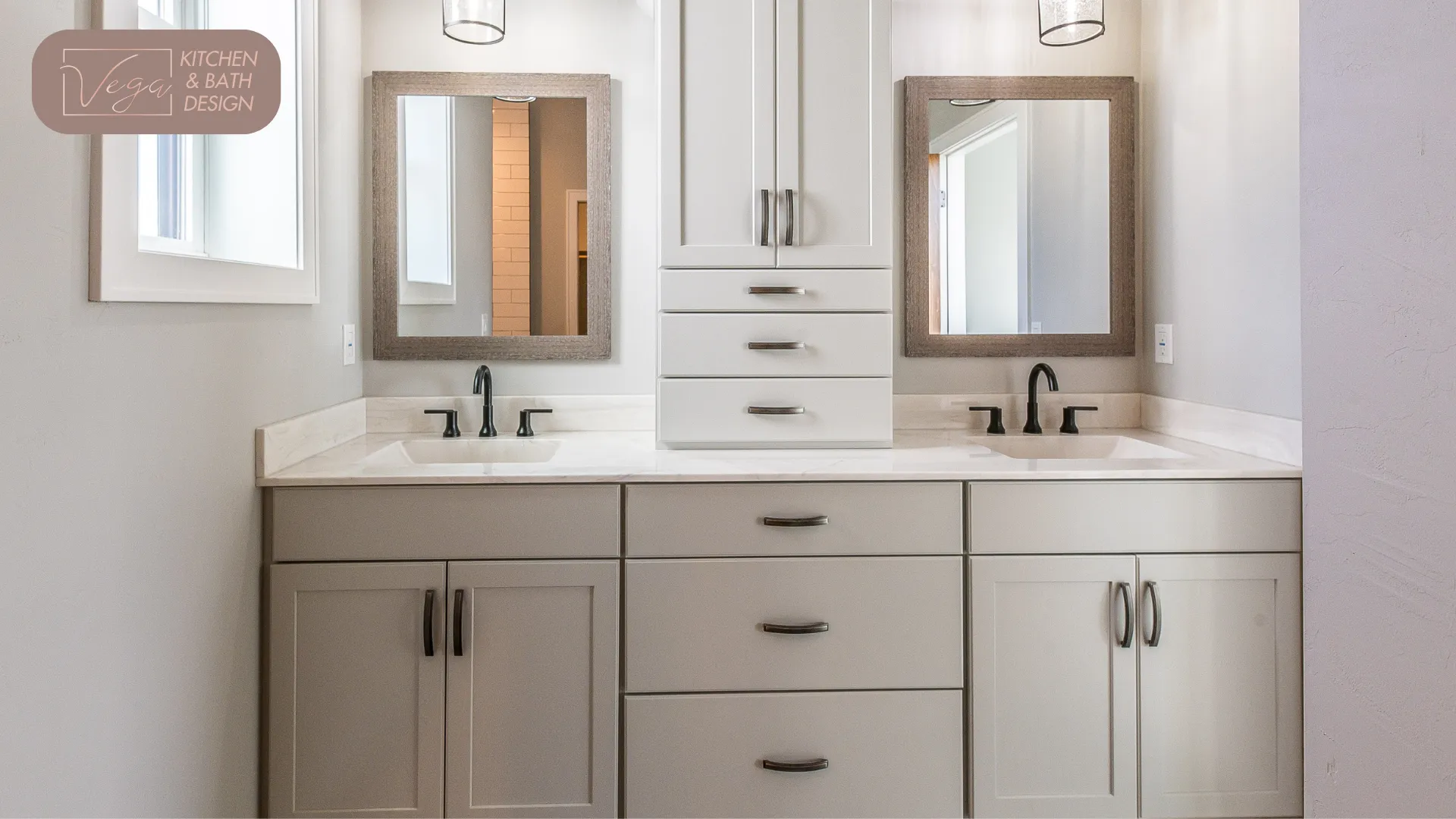
| Double sink symmetry | Matched pairs with center open shelf | Framed mirrors above each sink |
| Integrated LED lighting | Under-cabinet or lit mirrors | Any modern vanity style |
| Vessel sink vanity | Bowl-style sink above counter | Minimalist floating cabinet |
Where to See Bathroom Vanities in Person Near White Plains, NY
Reading about bathroom vanity styles and bathroom vanity materials is useful—but nothing replaces standing in front of a cabinet, pulling a drawer, running your hand across a countertop, and seeing how a finish looks under real lighting. That is exactly why Vega Kitchen & Bath designed a 5,500 sq. ft. showroom at 285 Central Ave, White Plains, NY.
At our showroom, Westchester County homeowners can browse a curated selection of bathroom vanities across every style and price point—from sleek floating vanities to traditional furniture-style floor cabinets—alongside our full collection of quartz countertops, natural stone, backsplash tiles, and frameless glass shower enclosures. Our design team also offers a free 3D bathroom design service so you can see your completed space before a single tile is laid.
Explore our Bathroom Remodeling services, browse our tile and backsplash options, or read our Bathroom Tile Trends 2026 guide for more design inspiration. Ready to get started? Schedule your showroom visit today—no pressure, just great design.
FAQ: Bathroom Vanity Buying Guide
1. What size bathroom vanity do I need?
Measure your available wall space and subtract enough clearance for the door swing and toilet (typically 15–21 inches from the vanity edge to the toilet centerline). Standard widths run from 18 inches for powder rooms up to 72+ inches for double-sink primary bathrooms. Always measure twice—and check depth too, since most vanities are 18–24 inches deep.
2. What is the standard height for a bathroom vanity?
Older vanities were built at 30–32 inches. Today’s standard is comfort height—34 to 36 inches—which is easier on the back for adults and aligns with ADA accessibility guidelines. If children use the bathroom, consider a step stool rather than going with a shorter vanity that will feel uncomfortable for adults within a few years.
3. What is the difference between a floating and a freestanding vanity?
A floating (wall-mounted) vanity is anchored to the wall with no floor contact, creating an open look that makes the room feel larger. A freestanding vanity sits on the floor like a piece of furniture and typically offers more storage. Floating vanities require reinforced walls; freestanding units are easier to install.
4. Is quartz or marble better for a bathroom vanity countertop?
Quartz is generally the more practical choice for busy bathrooms: it is non-porous, requires no sealing, and resists staining. Marble is harder to maintain—it requires annual sealing and is more susceptible to etching from acidic products—but delivers an unmatched natural beauty. For primary bathrooms with heavy daily use, quartz wins on durability. Marble is better suited for lower-traffic powder rooms where aesthetics take priority.
5. How much does it cost to replace a bathroom vanity in Westchester County?
According to local contractor data, the total cost to replace a bathroom vanity in Westchester ranges from approximately $430 to $3,700 for standard work—including the vanity unit, countertop, sink, and basic installation labor. Custom millwork or high-end stone countertops can push that figure significantly higher. Costs increase if plumbing or electrical systems need to be relocated or brought up to code.
6. What is a vessel sink vanity?
A vessel sink sits on top of the vanity counter rather than being recessed into it. It creates a bold focal point and works well in modern and transitional designs. Because it sits higher, the cabinet height is often reduced by 4–6 inches to maintain a comfortable working height. Keep in mind that vessel sinks require wall-mounted or deck-mounted faucets with a high enough spout to clear the basin.
7. Can I replace just the vanity top without replacing the cabinet?
Yes—if the cabinet box is still structurally sound and the dimensions match, swapping just the countertop and sink is a cost-effective refresh. Many Westchester homeowners do exactly this: keep the existing cabinet, upgrade to a quartz or marble countertop, and add new hardware for a completely updated look at a fraction of a full replacement cost.
8. Where can I see bathroom vanities in person near White Plains, NY?
Vega Kitchen & Bath at 285 Central Ave, White Plains has a full vanity display within its 5,500 sq. ft. showroom, serving homeowners throughout Westchester County and the tri-state area. The showroom also features countertop samples, tiles, and backsplashes, plus free 3D design consultations.